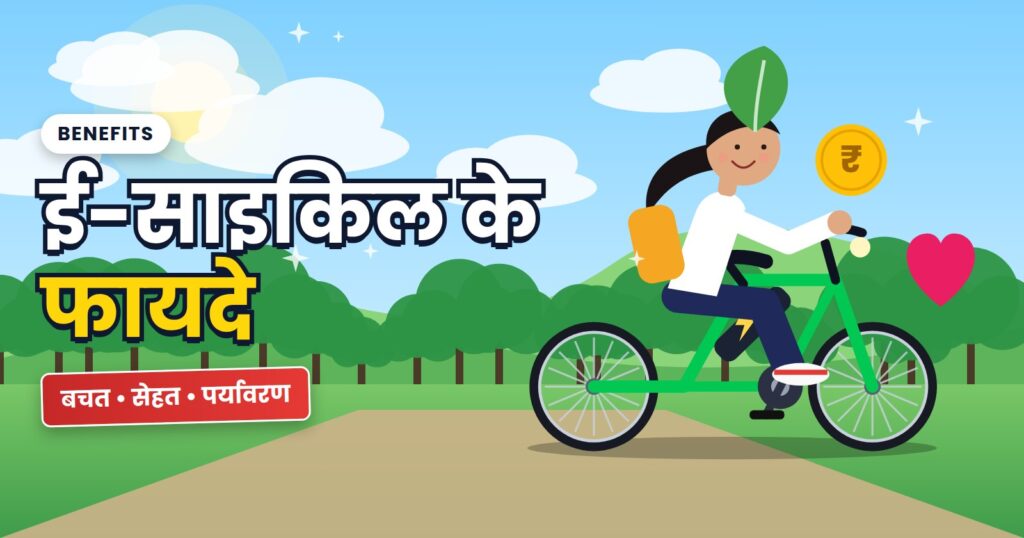
An electric cycle combines the simplicity of a bicycle with a small motor that makes pedalling easier. That small change makes a big difference in everyday life.
Lower costs
Charging an e-cycle battery costs only a few rupees per charge, far less than petrol. Maintenance is also simpler than that of a motorcycle or scooter, because there is no engine oil, clutch or exhaust system to look after.
Better health
You still pedal, so you get gentle exercise. Pedal assist helps people who may find a regular bicycle too tiring, such as those with long hills on their route or older riders.
Cleaner cities
E-cycles produce no tailpipe emissions and take little road space. Replacing short petrol trips with e-cycle trips reduces congestion, noise and local air pollution.
Practical advantages
- Easy parking and no fuel queues
- Usable for trips of roughly 5 to 20 km
- Many models have removable batteries for charging at home
- Often no licence or registration is needed for low-speed models, subject to local rules
Things to keep in mind
Real-world range is usually lower than the claimed range, especially with heavy loads, hills and a cold battery. Battery replacement is the largest long-term cost, so check the warranty.
| Factor | Effect on range |
|---|---|
| Hills | Reduces range |
| Heavy load | Reduces range |
| High assist level | Reduces range |
| Proper tyre pressure | Improves range |
Safety first
Wear a helmet, use lights and reflectors after dark and follow local traffic rules.
This guide is for general information only. We are not a government website. Rules and dates change, so confirm details on the official portal before you apply, and never pay anyone for a free scheme.