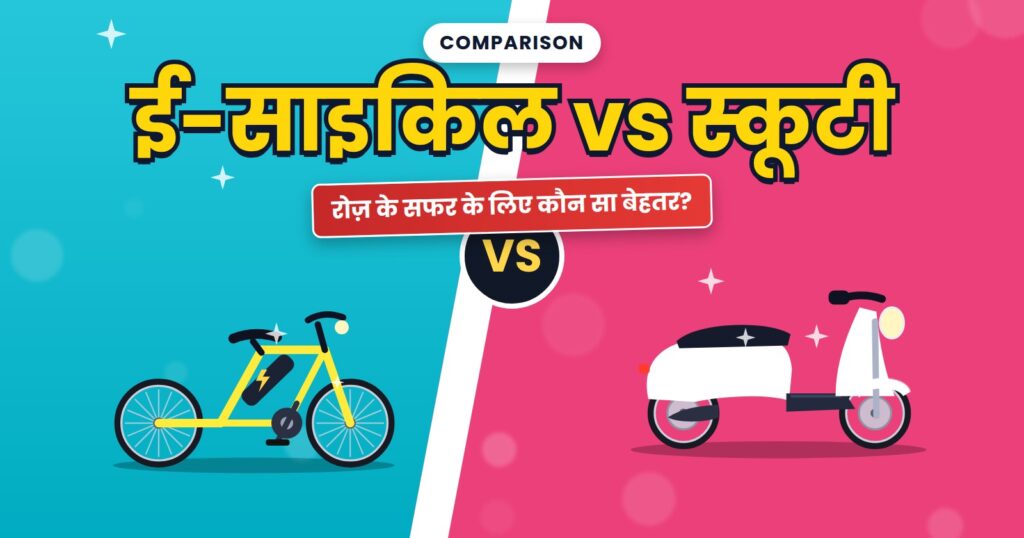
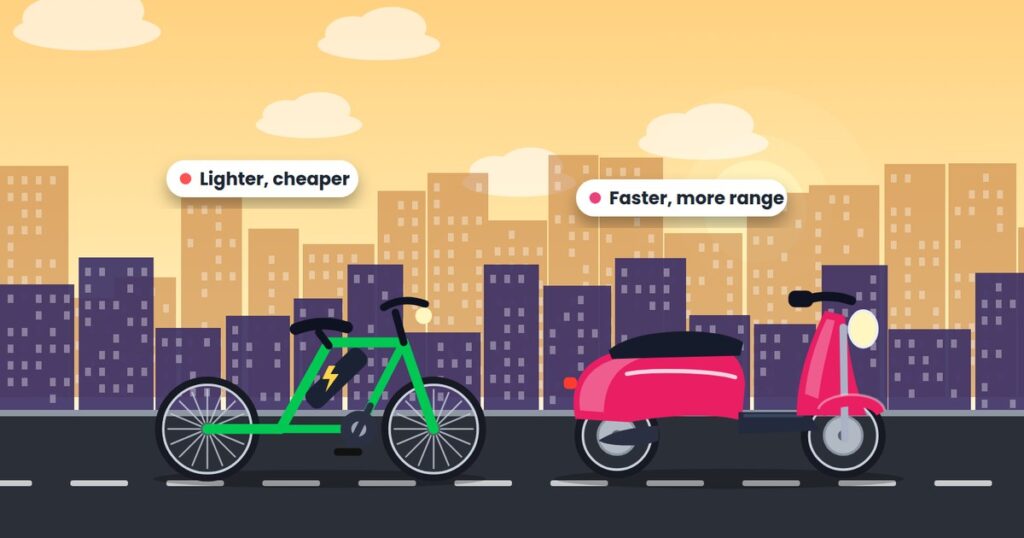
Both options can solve short-distance travel, but they suit different people. Here is a neutral comparison to help you decide.
Quick comparison
| Point | E-cycle | Scooty |
|---|---|---|
| Purchase cost | Generally lower | Generally higher |
| Running cost | Very low | Low to moderate |
| Licence and registration | Often not needed for low-speed models | Needed |
| Speed and range | Moderate | Higher |
| Carrying capacity | Limited | Better, with a pillion |
| Exercise | Yes, if you pedal | No |
Choose an e-cycle if
- Your regular trip is under about 10 km
- You want the lowest running cost
- Parking space is limited
- You would like gentle exercise
Choose a scooty if
- You travel longer distances or on busy roads
- You carry luggage or a pillion rider
- You ride in heavy traffic or on highways
- You qualify for a free scooty scheme
Cost over a year
An e-cycle usually costs less to buy and to run. A scooty has fuel, insurance and servicing costs. If your state offers a free scooty scheme and you qualify, the equation changes in favour of the scooty for longer trips.
Final thought
Look at your daily route, your budget and the schemes available in your state before you decide. You can always start with a cycle and move to a scooter later, or the other way round.
Whatever you choose, wear a helmet and follow traffic rules.
This guide is for general information only. We are not a government website. Rules and dates change, so confirm details on the official portal before you apply, and never pay anyone for a free scheme.